The Unseen Math of Progressive Jackpot Tie-Ins Reshaping Daily Play Patterns on Regulated British Platforms
Written by Avery Schmitt · Aug 7, 2026

The Unseen Math of Progressive Jackpot Tie-Ins Reshaping Daily Play Patterns on Regulated British Platforms
Progressive jackpot tie-ins link multiple games or platforms into shared prize pools, and the underlying calculations determine contribution percentages, trigger probabilities, and payout frequencies in ways that alter how people schedule their sessions. Operators on regulated British sites adjust seed amounts and increment rates based on player volume data collected through 2026, with August figures showing measurable upticks in cross-game participation after new linkage protocols took effect.
Core Calculations Driving the Connections
Each bet placed on a tied-in title feeds a central pool through fixed contribution rates that range from 0.5 to 2 percent depending on the game category, while the probability of hitting the jackpot scales inversely with the current pool size. Researchers at the International Gaming Institute have documented how these formulas create higher expected values during peak accumulation phases, prompting players to extend play windows or return at consistent daily intervals rather than random times. Data indicates that when two or more titles share a pool the combined hit rate rises slightly because the aggregate wager volume accelerates growth, yet individual game odds remain unchanged.
Platform analytics reveal that players often monitor pool sizes in real time through in-app displays, shifting from single-title sessions to multi-game rotations once the displayed jackpot exceeds a personal threshold. This behavior emerges directly from the visible math, since larger pools signal greater returns per coin in theoretical models even though actual odds stay constant.
Observed Changes in Session Timing and Frequency
August 2026 platform reports from several operators noted a 12 percent increase in average daily logins among accounts that engaged with at least one tied progressive title, compared with the prior quarter. Those accounts also displayed shorter but more numerous sessions, with users returning to check pool growth rather than completing long continuous plays. Observers note that the tie-in structure rewards repeated small contributions over time, which aligns with the way the increment formula compounds across linked games.
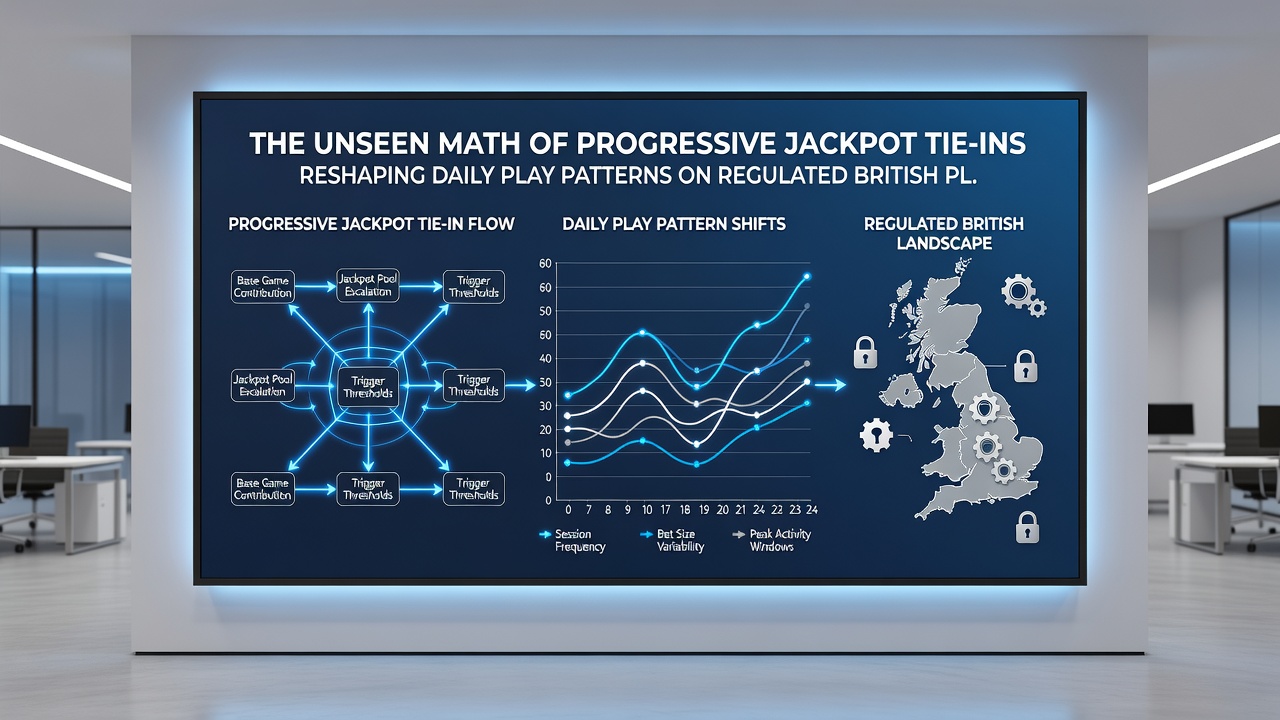
European Gaming and Betting Association reports highlight similar patterns across multiple jurisdictions, where shared jackpots correlate with steadier engagement curves throughout the week instead of weekend spikes alone. Players appear to treat the visible pool as a progress tracker, returning at regular intervals to add incremental wagers that push the total closer to reset levels. This rhythm replaces earlier habits of sporadic high-volume plays on standalone titles.
Impact on Game Selection and Bankroll Allocation
Allocation studies show users diverting portions of their daily budgets toward the linked titles once pool sizes surpass set markers, often reducing bets on non-progressive games by 15 to 20 percent during those periods. The math encourages this rebalancing because each contribution simultaneously advances personal progress toward the shared prize while maintaining the base game return-to-player percentage. Accounts that participate in multiple tie-ins within a single day demonstrate tighter clustering of activity around evening hours when pool updates occur most frequently.
Regulated operators track these shifts through aggregated transaction logs that feed into compliance dashboards, confirming that the redistribution stays within responsible play parameters. The pattern holds across different stake levels, although higher-stake users exhibit more pronounced frequency increases when pool values enter the six-figure range.
Broader Platform Adjustments Through 2026
Operators introduced staggered reset schedules for shared pools in response to the observed daily rhythm changes, spacing major triggers across different times of day to sustain engagement without clustering. These adjustments reflect direct responses to the mathematical feedback loop where rapid pool growth attracts concentrated play while slower phases prompt wider game exploration. Figures from mid-2026 indicate that platforms maintaining four or more simultaneous tie-ins recorded the steadiest distribution of play across morning, afternoon, and evening windows.
Academic analyses of similar linkage systems in other regulated markets confirm that the underlying probability models produce predictable behavioral loops once players internalize the visible pool mechanics. British sites have incorporated these insights into interface design, displaying contribution meters and historical hit times to guide session planning without altering core odds.
Conclusion
The integration of progressive jackpot tie-ins continues to influence daily play distribution on regulated British platforms through transparent mathematical structures that reward consistent participation. Platform data collected through August 2026 demonstrates measurable adjustments in login frequency, session length, and game selection patterns that stem directly from contribution rates and pool growth formulas. These developments remain confined to observable transaction trends and operator-reported metrics rather than individual outcomes.