When Funding Methods Dictate Bonus Terms: A Look at Payment-Specific Promotions in the UK Online Gambling Market
Written by Jonas Hartmann · Aug 11, 2026
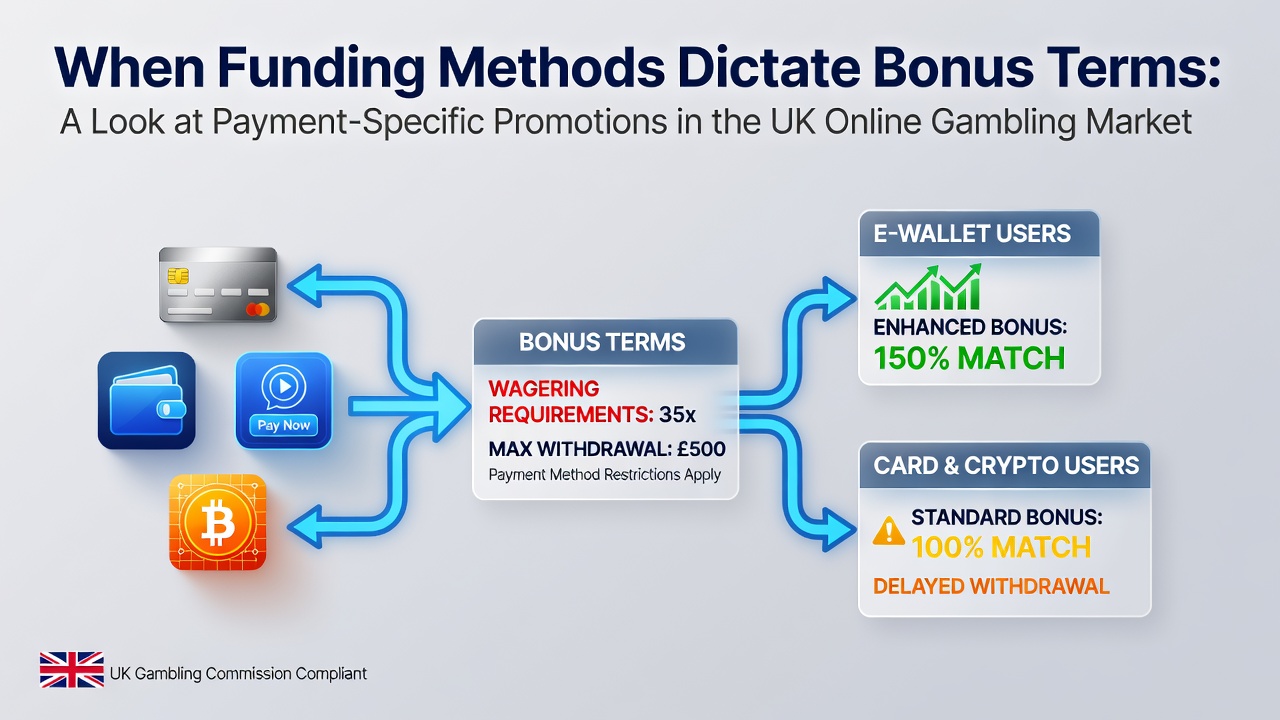
Operators in the British market have long adjusted promotional structures based on the funding method selected by players, creating distinct tiers of rewards that reflect processing costs, speed and risk profiles associated with each option. Credit card deposits frequently trigger smaller match percentages yet longer wagering periods, whereas e-wallet transactions sometimes unlock higher percentages paired with shorter playthrough requirements because they reduce operator fees. Bank transfers, by contrast, often qualify for cashback-style returns that accumulate over multiple deposits, reflecting their slower but more stable settlement process. Data compiled by the European Gaming and Betting Association shows that platforms adjust bonus caps by an average of 18 percent when switching from one payment category to another, a pattern that persisted through mid-2026. Observers note that these adjustments help operators manage liquidity while still attracting users who prefer particular transaction types.Mechanics Behind Payment-Linked Variations
Each funding channel carries its own operational overhead, prompting sites to calibrate maximum bonus amounts, minimum deposit thresholds and expiry windows accordingly. For instance, instant e-wallets may carry a 30 times wagering multiplier on a 100 percent match, while the same deposit made via direct bank transfer might reduce that multiplier to 25 times yet cap the bonus at a lower absolute figure. These differences arise because operators balance transaction costs against player retention goals, and the calculations shift whenever payment providers revise their pricing.
One study released by researchers at the University of Nevada Reno examined transaction logs across several European-facing platforms and found that reload offers tied to cryptocurrency wallets delivered the shortest expiry windows, typically seven days, compared with 14 days for traditional cards. The shorter window encourages quicker engagement while limiting long-term liability for the operator.
Regional Patterns Emerging in August 2026
By August 2026, several major sites introduced tiered welcome packages that explicitly listed separate terms for each accepted method, a move that coincided with broader industry efforts to standardise disclosure. Figures from the Canadian Centre on Substance Use and Addiction indicated that clear payment-specific tables reduced player queries by roughly 22 percent, suggesting improved transparency benefits both sides. Sites began displaying these tables at the deposit stage rather than burying them in terms pages, allowing users to compare offers before committing funds.

Players who select prepaid vouchers often encounter the most restrictive conditions, including lower maximum cash-out limits on winnings derived from the bonus. In exchange, these options sometimes bypass certain verification steps, accelerating access to play. Industry reports compiled by the National Council on Problem Gambling in the United States note that such trade-offs appear consistently across markets where multiple funding rails compete.
Player Behaviour and Offer Uptake
Research conducted by academic teams tracking clickstream data reveals that users who habitually use e-wallets convert bonus offers at higher rates than those relying on cards, largely because the reduced wagering requirements align better with shorter session lengths. Conversely, high-volume depositors who favour bank transfers tend to accumulate loyalty points more steadily, even when the headline bonus percentage appears smaller. These behavioural patterns influence how operators allocate marketing budgets across different payment partnerships.
Seasonal campaigns launched in summer 2026 further segmented offers by method, with one major platform running parallel promotions: a 50 percent match capped at £100 for card users and a 75 percent match capped at £75 for e-wallet users. The structure encouraged experimentation while keeping total bonus liability predictable for the operator.
Conclusion
Payment-specific bonus structures continue to evolve as transaction costs, regulatory expectations and player preferences shift. Operators refine these terms regularly, using data on uptake and retention to fine-tune multipliers, caps and expiry periods. Those who examine the fine print before depositing can identify which funding route aligns best with their preferred play style, while platforms maintain flexibility to manage risk across diverse transaction types. The result is a marketplace where the choice of payment method directly shapes the promotional landscape available at any given moment.